Tree Surgery & Climbing
Aerial Tree Pruning,Done Properly,To BS 3998 Standards.
Selective pruning from the canopy down — improving tree health, shape and safety without the butcher-job look that DIY pruning leaves behind.
✓ BS 3998 compliant · 200+ canopies pruned · £1m insured
What is Aerial Tree Pruning?
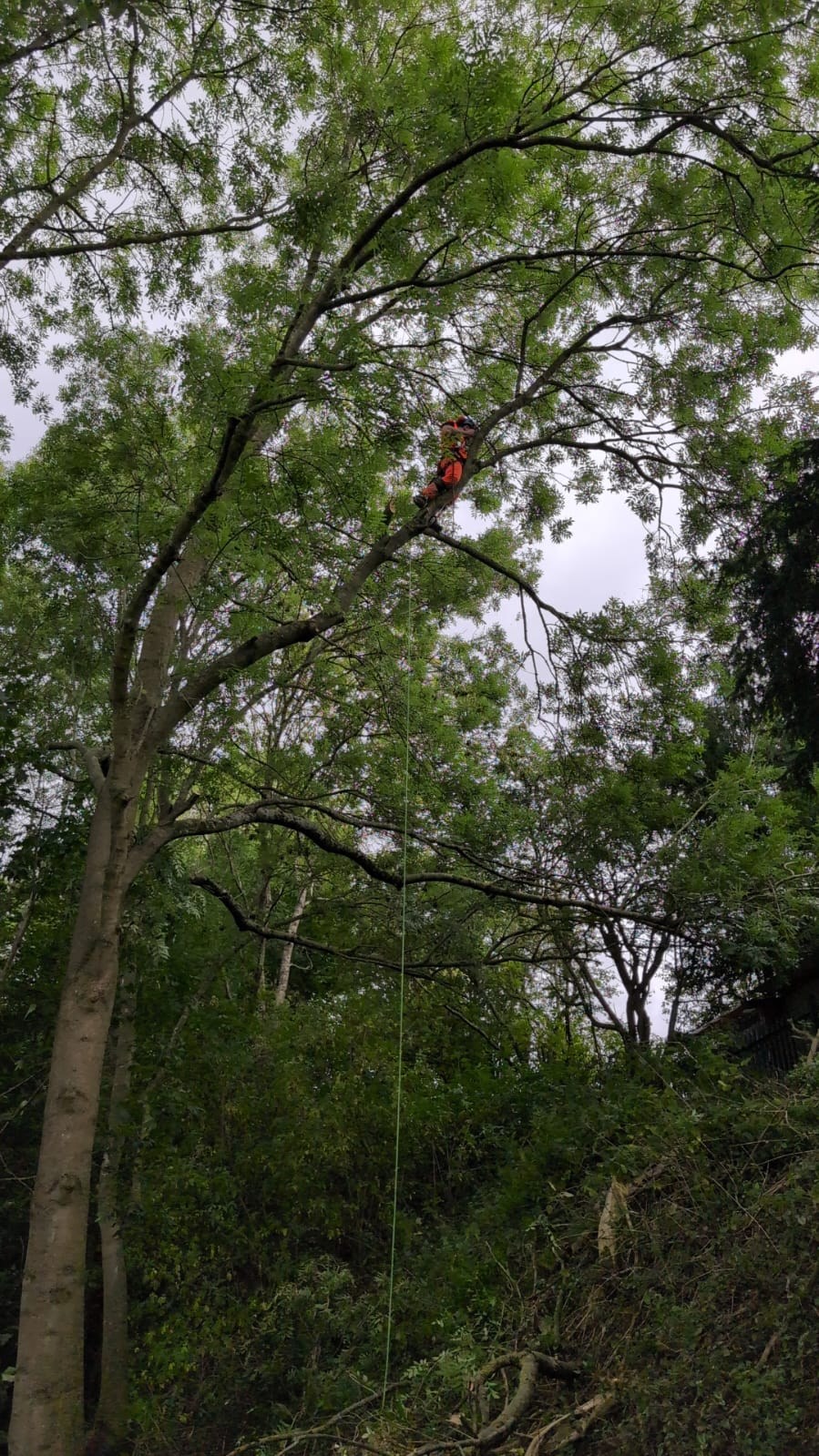
Aerial tree pruning is the selective removal of branches from within the canopy of a tree by a climber. Done correctly, it improves the tree's structure, health and longevity. Done badly, it weakens the tree, ruins its shape and invites decay through poorly placed cuts.
We follow BS 3998:2010 — the British Standard for tree work — which sets out where cuts should be placed, how much can be removed safely, and which species respond well to which techniques. The result is a tree that looks naturally pruned, not hacked back.
Aerial pruning is suited to mature trees in domestic gardens, ornamental specimens on commercial sites, and street trees needing clearance from highways or signage.
Who It's For
- Owners of mature deciduous and evergreen trees
- Heritage properties with veteran specimens
- Commercial sites with formal landscape design
- Highway authorities and managing agents
When It's Needed
- Branches are rubbing, crossing or growing into structures
- Tree shape is unbalanced or top-heavy
- Light needs to be restored to the garden or a window
- Deadwood needs removing for safety
- Structural pruning is overdue (every 3–5 years for most species)
What Happens If You Leave It
Topping — cutting all the major limbs back to stubs — is still the most common 'pruning' approach used by untrained operators. It looks tidy for one season, then the tree responds with weakly attached watershoots that grow faster, taller and more dangerous than what was removed. Five years later you're paying again, and the tree's structural integrity is permanently compromised.
Bad cut placement is the other silent killer. A flush cut removes the branch collar, where the tree's natural compartmentalisation chemicals live. Without that boundary, decay enters the trunk and spreads — invisibly — for years before showing as a fungal bracket or hollow.
Our 5-Step Process
Free Site Inspection
We visit, listen and assess access, hazards and surrounding structures before quoting a single penny.
Written Diagnosis & Quote
You get a clear scope of works, fixed price and method statement — usually within 24 hours of the visit.
Scheduled Visit
We agree a date that suits you, confirm the day before and arrive on time with the right kit and crew.
Safe Execution
Risk assessments and permits handled. Roping, rigging and cutting carried out to NPTC and BS 3998 standards.
Clearance & Sign-Off
All arisings removed (or chipped/logged for you), site swept clean, photos sent and invoice issued.
Why Choose RJ Hutchinson
Healthier Trees
Correct cuts heal cleanly, keeping decay and disease out.
Natural Shape
Selective thinning preserves the tree's character — no stubby silhouette.
Better Light & Air
Crown thinning lifts the gloom from gardens without removing the tree.
Reduced Storm Risk
Strategic weight removal cuts wind sail and limb failure risk.
Longer Tree Life
BS 3998 pruning extends useful life by decades vs. topping.
Property Protection
Branches lifted away from roofs, gutters, cars and conservatories.
Aerial Tree Pruning: The Full Detail
Pruning Techniques: Lifting, Thinning, Reducing
Crown lifting removes the lower branches to raise the canopy clearance — useful for highways (5.2m clearance), pedestrian access (2.5m) or simply restoring usable garden space underneath. Done correctly, no more than 15% of the live canopy is removed per year.
Crown thinning selectively removes inner secondary branches to let light and wind through the canopy. It reduces wind sail without changing the tree's silhouette — ideal for mature ornamentals close to buildings.
Crown reduction shortens the outer canopy by cutting back to suitable lateral growth points (never to stubs). It reduces overall sail area and weight while preserving the tree's natural form.
Timing & Species Considerations
Most deciduous trees are pruned between October and March while dormant. Cherry, plum and other Prunus species are pruned in mid-summer to avoid silver leaf disease. Walnut and birch bleed sap heavily if pruned in spring — late summer is better. Magnolia is best pruned just after flowering.
Heavy pruning is never done in May–June when trees are putting on most of their annual growth. We schedule work around species and season to give the best long-term result.
Aerial Tree Pruning — Frequently Asked Questions
How much canopy can be removed in one go?+
BS 3998 recommends no more than 25–30% of live foliage in a single year for established trees, less for veterans or stressed specimens.
When is the best time to prune?+
Most species: October–March (dormant). Prunus: summer. We'll advise based on your tree.
How often should mature trees be pruned?+
Every 3–5 years for active management; every 7–10 years for slow-growing species like oak or yew.
Will pruning kill the tree?+
Not when done correctly. Bad pruning (topping) shortens life dramatically; correct BS 3998 pruning extends it.
Do I need permission for pruning?+
TPO and Conservation Area trees do — we handle the council notification for free.
How much does aerial pruning cost?+
Typically £200–£800 per tree depending on size, species and access.
Can you prune fruit trees?+
Yes — apple, pear, plum and cherry, including formative work for trained shapes.
Is the wood removed?+
Yes by default — chip away, logs stacked or removed. We can leave logs for firewood on request.
Related Services
Ready For a Free Quote on Aerial Tree Pruning?
Free site visit, fixed-price written quote, no pressure. Call directly or send a few details — most quotes back within 24 hours.