
Tree Surgery & Climbing
Traditional PollardingAcross Stafford& Staffordshire.
Restore historic pollards or initiate new ones on suitable species — keeping mature trees healthy, manageable and at the size you want for decades to come.
✓ Specialist in willow, lime & plane pollards · 15+ years experience · Fully insured
What is Pollarding?
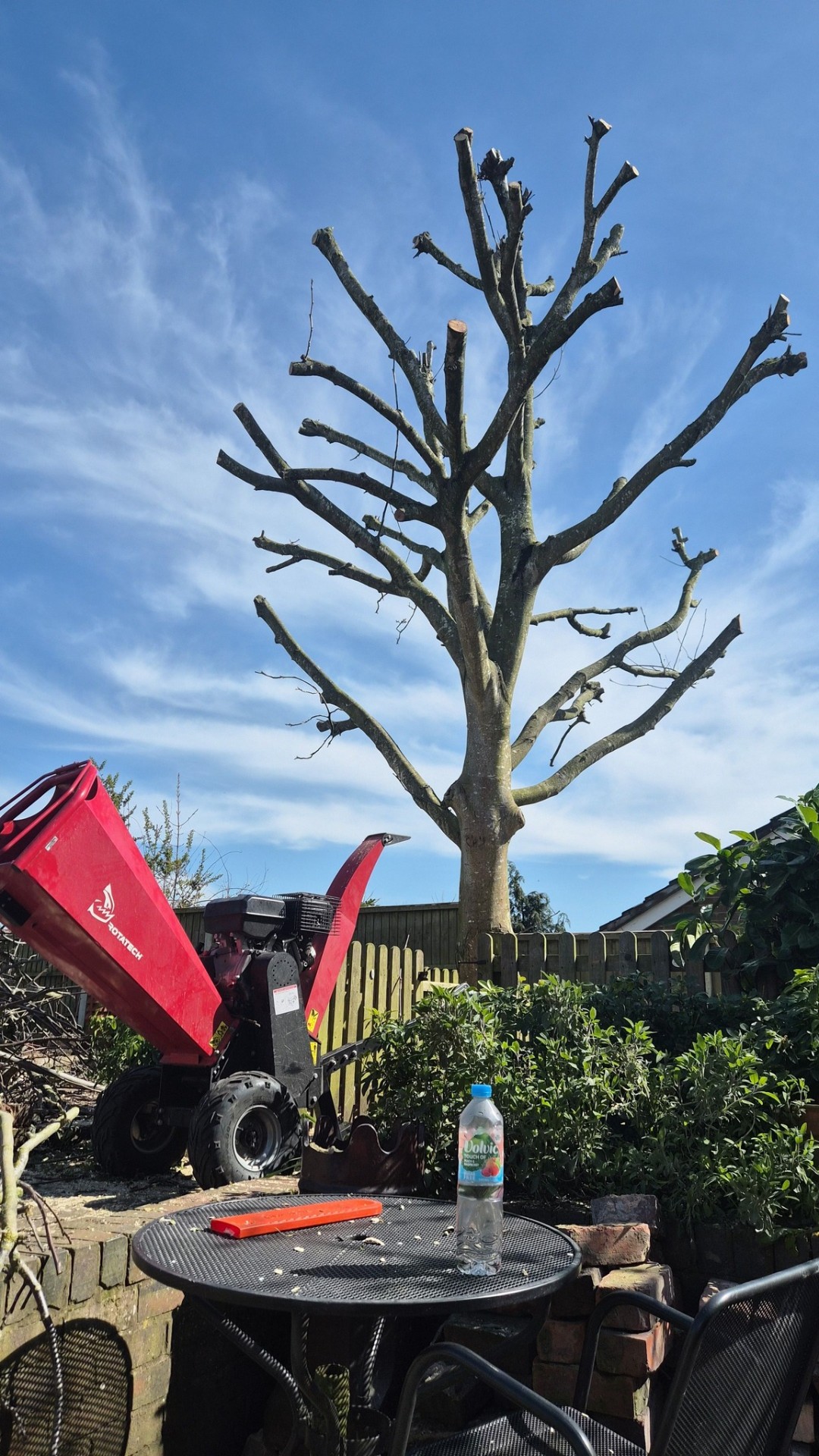
Pollarding is a traditional pruning technique where a tree's main branches are cut back to a defined point at regular intervals — typically every 2–5 years. The tree responds with a dense head of new growth that's easy to manage, structurally sound and keeps the tree at a fixed size indefinitely.
Done from a young age, pollarding extends a tree's useful life dramatically — many ancient pollarded oaks in England are 600+ years old. Done on the wrong species or at the wrong age, it can kill the tree.
We specialise in pollarding willow, lime, plane and (carefully) selected other species. We never pollard species that don't tolerate it, and we never start a pollarding cycle on a tree that wasn't designed for it.
Who It's For
- Owners of historically pollarded trees needing re-pollarding
- Riverside properties with willows getting too large
- Estates managing avenue trees (lime, plane)
- Sites where a fixed-size tree is required
When It's Needed
- Existing pollard hasn't been cut in 5+ years and is becoming top-heavy
- Young suitable tree (3–8 years) being trained for pollard form
- Mature willow becoming hazardous near structures
- Avenue maintenance on commercial or estate sites
What Happens If You Leave It
Pollarding the wrong species is a death sentence. Beech, cherry, hornbeam and most conifers do not tolerate pollarding — they fail to regenerate, decay sets in at the cut points, and the tree dies within 2–5 years. We've been called in to assess (and unfortunately remove) trees pollarded by inexperienced operators.
Equally, lapsed pollards — pollards that haven't been cut in decades — are dangerous to re-cut without staged restoration. Going back to the original points in one go can shock-kill the tree.
Our 5-Step Process
Free Site Inspection
We visit, listen and assess access, hazards and surrounding structures before quoting a single penny.
Written Diagnosis & Quote
You get a clear scope of works, fixed price and method statement — usually within 24 hours of the visit.
Scheduled Visit
We agree a date that suits you, confirm the day before and arrive on time with the right kit and crew.
Safe Execution
Risk assessments and permits handled. Roping, rigging and cutting carried out to NPTC and BS 3998 standards.
Clearance & Sign-Off
All arisings removed (or chipped/logged for you), site swept clean, photos sent and invoice issued.
Why Choose RJ Hutchinson
Fixed-Size Trees
Maintain a tree at exactly the height you want, indefinitely.
Extended Lifespan
Pollarded trees can live centuries longer than untreated equivalents.
Structural Safety
Regularly cut pollards have strong, well-attached regrowth.
Historic Continuity
Maintains traditional landscape features and habitat.
Fast Regrowth
Vigorous response in suitable species — dense new canopy in 2–3 years.
Easier Long-Term Management
Predictable, repeatable cycles — no surprise quotes.
Pollarding: The Full Detail
Suitable Species & Cycle Lengths
Willow (all species) — 1–3 year cycle, very tolerant. Lime — 3–5 year cycle, ideal candidate. London plane — 4–6 year cycle. Oak — 5–10 year cycle if started young. Ash, hornbeam, sweet chestnut and mulberry can also be pollarded by experienced practitioners.
Beech, birch, cherry, magnolia, walnut and most conifers should never be pollarded — we'll recommend reduction or alternative management instead.
Restoration of Lapsed Pollards
Where a pollard has been left for 20+ years, going back to original points in one cut can kill the tree. We use staged restoration — taking 30–40% off in year one, the remainder in year three or four. This keeps enough live foliage for the tree to recover.
Every job is covered by £1m Public Liability Insurance and carried out under method statements and risk assessments tailored to your site.
Pollarding — Frequently Asked Questions
Can any tree be pollarded?+
No — only species that tolerate it (willow, lime, plane, oak when young, etc). We'll advise honestly.
How often does a pollard need cutting?+
Depending on species: 2–5 years typically. Willow can be 1–2 years; lime 3–5.
What's the best time to pollard?+
Late winter (February–March) for most species, before bud break.
How much does pollarding cost?+
Typically £150–£600 per tree depending on size and access.
Will the tree look bare afterwards?+
Yes, briefly — but regrowth is rapid and the tree is in full leaf again by mid-summer.
Can you start a new pollard on my mature tree?+
Usually no — pollarding should ideally start when the tree is 3–8 years old. Reduction is a better option for mature trees.
Is it different from topping?+
Yes — pollarding is a planned, repeated cycle on suitable species. Topping is one-off butchery on unsuitable trees.
Do I need permission?+
If TPO or in a Conservation Area, yes — we handle it.
Related Services
Ready For a Free Quote on Pollarding?
Free site visit, fixed-price written quote, no pressure. Call directly or send a few details — most quotes back within 24 hours.