Tree Surgery & Climbing
Climbing Arborist ServicesAcross Stafford& Staffordshire.
Specialist aerial work where ladders won't reach and machines can't get in — performed by NPTC CS38/39 qualified climbers using modern rope systems.
✓ NPTC CS38/39 certified · 15+ years aerial experience · £1m insured
What is Climbing Arborist Work?
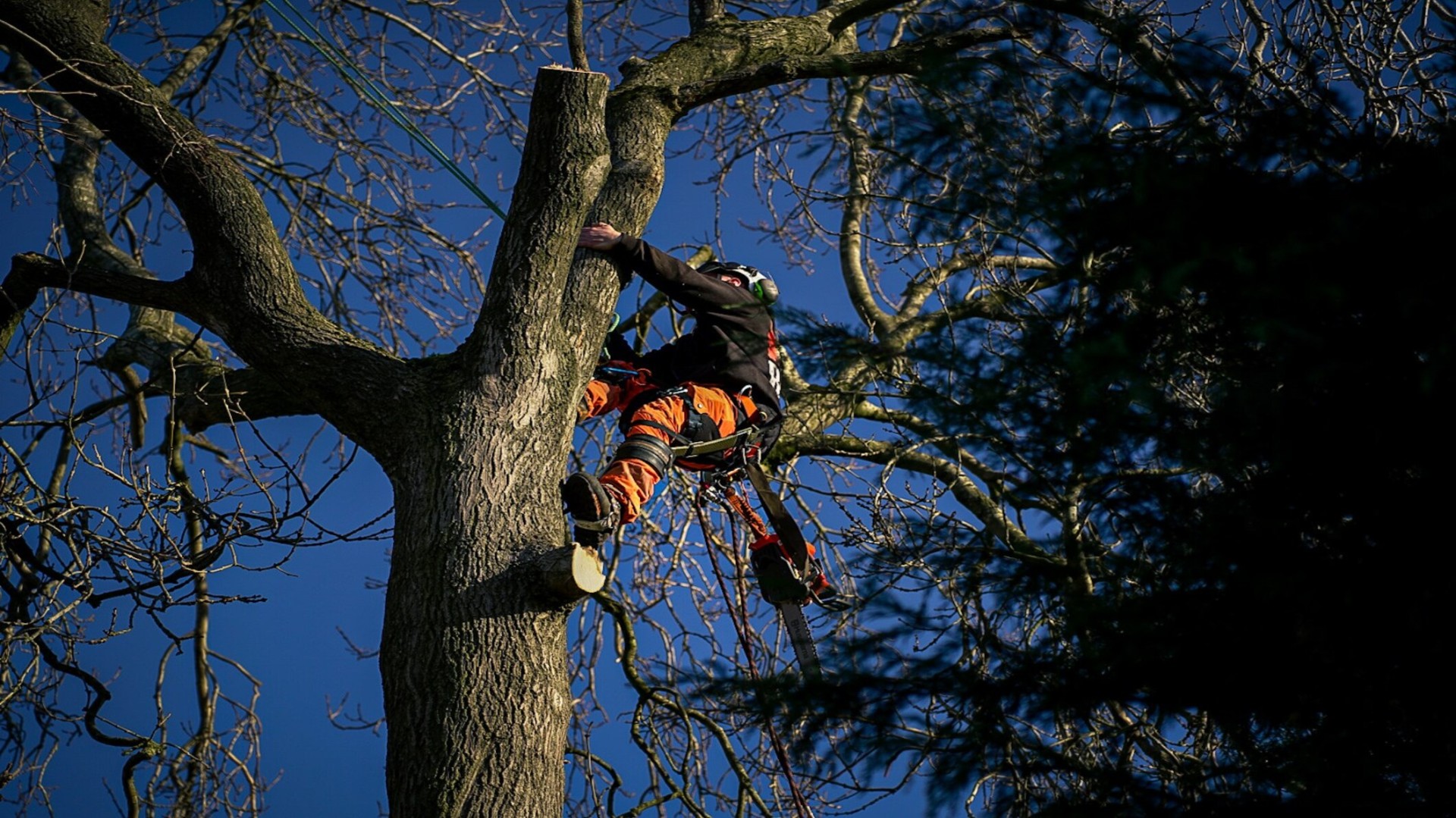
A climbing arborist is a tree surgeon trained, equipped and certified to work safely in the canopy. While ground-based pruning handles small ornamentals, anything over about 6 metres — or anything growing close to buildings, glass or cables — needs a climber to access it properly.
Our lead climber holds NPTC CS38 (Tree Climbing & Aerial Rescue) and CS39 (Aerial Chainsaw Use), backed by 15 years of aerial experience including Army training in rope work and high-angle access. That combination is rare in domestic arb — and it's why we're trusted with the trees other firms quote 'too risky' on.
Aerial work covers everything from delicate formative pruning of veteran oaks to complete dismantling of dead conifers. The climbing skill is the same; the cuts and rigging are tailored to the job.
Who It's For
- Owners of large or mature trees beyond ladder height
- Commercial sites needing aerial inspection or pruning
- Estates with veteran trees requiring careful canopy work
- Anyone who's been told 'we can't reach that' by another contractor
When It's Needed
- Pruning, deadwooding or thinning above 6 metres
- Sectional dismantling in tight gardens
- Aerial inspection for structural defects
- Cabling and bracing installation
- Storm damage assessment and clearance
What Happens If You Leave It
Climbing trees without proper training kills people every year. The Health and Safety Executive logs fatal arboricultural incidents annually, and a high proportion involve untrained operators using ladders, climbing spikes inappropriately, or working without a backup line.
Beyond the safety side, untrained climbing damages trees. Spike-climbing a tree you're only pruning leaves permanent puncture wounds that invite decay. Bad cut placement creates flush wounds that never heal. The cheap quote often costs the tree.
Our 5-Step Process
Free Site Inspection
We visit, listen and assess access, hazards and surrounding structures before quoting a single penny.
Written Diagnosis & Quote
You get a clear scope of works, fixed price and method statement — usually within 24 hours of the visit.
Scheduled Visit
We agree a date that suits you, confirm the day before and arrive on time with the right kit and crew.
Safe Execution
Risk assessments and permits handled. Roping, rigging and cutting carried out to NPTC and BS 3998 standards.
Clearance & Sign-Off
All arisings removed (or chipped/logged for you), site swept clean, photos sent and invoice issued.
Why Choose RJ Hutchinson
Reach Anywhere
Trained access into trees up to 30 metres tall, in spaces no MEWP can fit.
Tree-Friendly Cuts
Pruning to BS 3998 standards — no flush cuts, no stub cuts, healthy callusing.
No Spike Damage
Spikes only used on trees being removed, never on trees being kept.
Aerial Rescue Trained
CS38 includes casualty rescue from height — peace of mind for any client.
Modern Kit
DMM, Petzl and Stein equipment, inspected and logged to LOLER standards.
Discreet Working
Quiet, minimal-impact aerial work that doesn't disturb neighbours or wildlife.
Climbing Arborist Work: The Full Detail
Equipment, Standards & LOLER Compliance
All climbing PPE — harnesses, ropes, lanyards, carabiners — is inspected to LOLER (Lifting Operations and Lifting Equipment Regulations) at six-monthly intervals by a competent person, with records kept on file. Ropes are retired after the manufacturer's stated lifespan or any shock-loading event.
We work to BS 3998:2010 (Tree Work — Recommendations) for all pruning specifications. That means cuts placed at the branch collar, no removal of more than 30% of live canopy in a single year, and no topping or lopping unless specifically agreed for safety reasons.
When Climbing Is The Right Choice
Climbing is preferred when access for vehicles is limited, when delicate or precise cuts are needed (formative pruning, fruit tree management), and when working around features like nest boxes, cables or stained-glass windows. It's also the only practical option for inspecting upper canopy structure on veteran trees.
Where a MEWP can fit and the work is repetitive across a large canopy, we'll often combine the two — climber for precise cuts, MEWP for bulk removal. Both options are quoted transparently.
Climbing Arborist Work — Frequently Asked Questions
Are your climbers certified?+
Yes — NPTC CS38 (climbing & aerial rescue) and CS39 (aerial chainsaw) as a minimum. Certificates available on request.
How high can you climb?+
We regularly work in trees up to 25–30 metres. Anything higher, we'll combine climbing with crane access.
Can climbers work alone?+
Never. UK guidance and our own policy require a competent ground crew at all times for aerial rescue capability.
Do you climb dead or diseased trees?+
Only after a structural assessment. Some are safe to climb; some need a MEWP or crane. We'll tell you honestly which yours is.
How is climbing priced?+
By the hour for inspections; by job (fixed price) for pruning and dismantling. Always quoted before work starts.
Do you damage the bark?+
No — we use cambium savers and friction protectors. Climbing spikes are never used on retained trees.
Is climbing covered by your insurance?+
Yes, fully — Public Liability and Employers' Liability up to £1m.
Can you climb in winter?+
Yes. In fact, deciduous trees are easier to inspect and prune when leafless. Frosty mornings need extra care for grip.
Related Services
Ready For a Free Quote on Climbing Arborist Work?
Free site visit, fixed-price written quote, no pressure. Call directly or send a few details — most quotes back within 24 hours.