Clearance & Ground Work
Ivy Removal AcrossStafford, Lichfield& All of Staffordshire.
Strip ivy from walls, trees, fences and buildings — properly, with root treatment so it doesn't come straight back.
✓ Walls, trees & buildings · Treatment included · Fully insured
What is Ivy Removal?
Ivy (Hedera helix) is harmless on healthy walls, but on damaged mortar, painted surfaces, fences, trees and buildings it can cause genuine damage. The aerial roots prise loose mortar joints, hold moisture against timber, and on trees the canopy weight plus wind sail can contribute to failure.
We strip ivy mechanically from any surface — walls, fences, mature trees, outbuildings — and either dig or chemically treat the root mass to prevent regrowth. Most domestic jobs are completed in a single day.
We work to BS 3998 when removing ivy from trees: cutting through the basal stem, leaving the dead foliage to fall naturally over 6–12 months rather than ripping it down (which damages bark).
Who It's For
- Homeowners with ivy taking over walls, fences or trees
- Listed building owners protecting historic stonework
- Tree owners concerned about ivy weight on mature specimens
- Anyone preparing a property for sale or renovation
When It's Needed
- Ivy has reached the gutters, soffits or roofline
- Mortar joints are visibly loose where ivy roots have penetrated
- A tree's trunk is fully clad and showing decline
- Fence line is being pulled down by weight
What Happens If You Leave It
Ivy on a tree adds significant wind load and obscures structural problems. Ivy-clad trees are harder to inspect, more likely to fail in storms, and shed branches without warning. We've removed countless ivy-cloaked trees that turned out to have catastrophic decay underneath — invisible until the ivy came off.
Ripping ivy off walls usually takes the mortar with it. Patient, proper stripping with treatment is the only way to remove it without damage to the surface beneath.
Our 5-Step Process
Free Site Inspection
We visit, listen and assess access, hazards and surrounding structures before quoting a single penny.
Written Diagnosis & Quote
You get a clear scope of works, fixed price and method statement — usually within 24 hours of the visit.
Scheduled Visit
We agree a date that suits you, confirm the day before and arrive on time with the right kit and crew.
Safe Execution
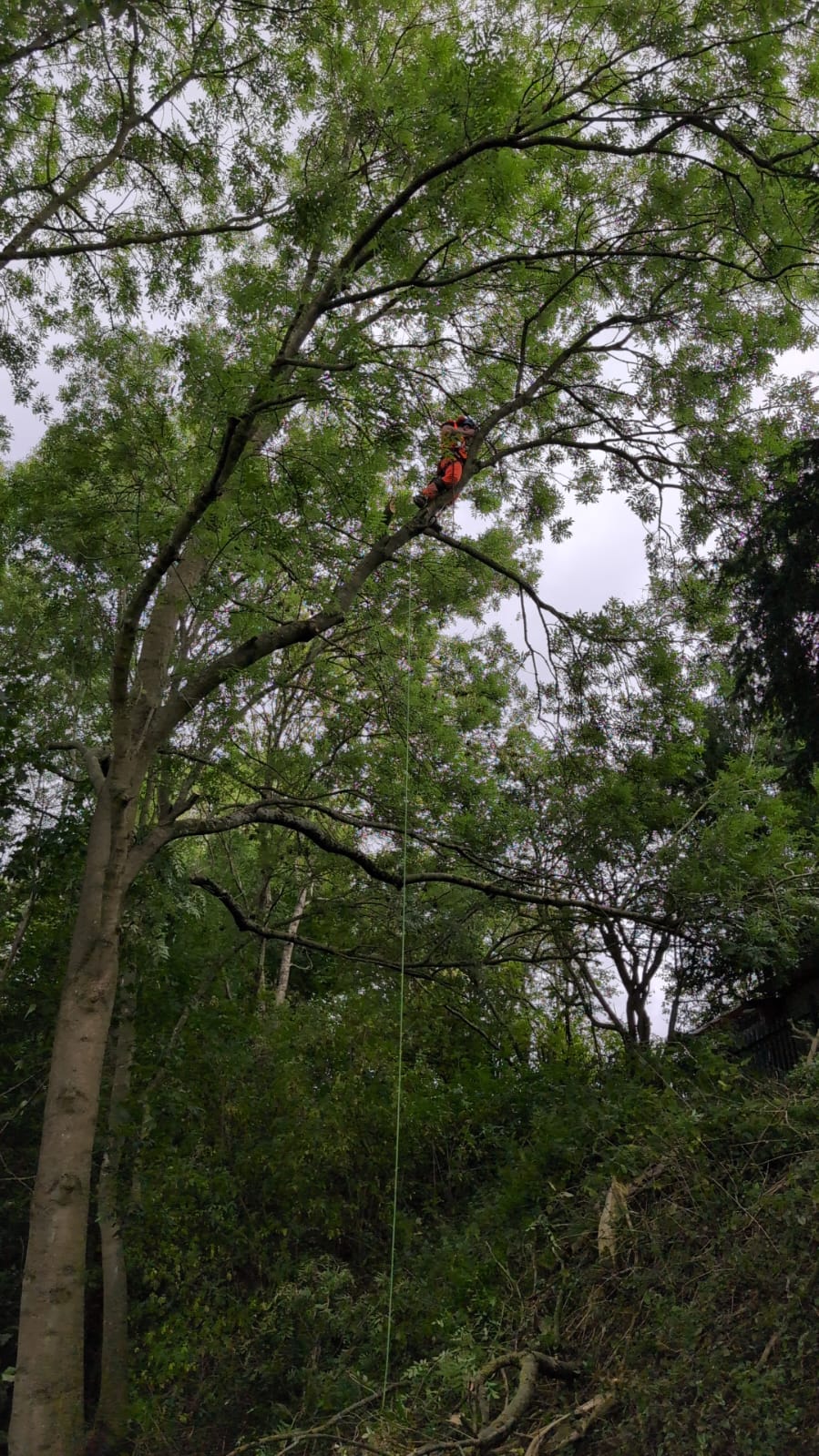
Risk assessments and permits handled. Roping, rigging and cutting carried out to NPTC and BS 3998 standards.
Clearance & Sign-Off
All arisings removed (or chipped/logged for you), site swept clean, photos sent and invoice issued.
Why Choose RJ Hutchinson
Surface-Safe Stripping
Mortar joints, render and fence panels protected during removal.
Tree-Friendly Method
BS 3998 basal cut — dead foliage falls naturally without bark damage.
Root Treatment Included
Crown removal or chemical treatment to prevent regrowth.
Hidden Damage Revealed
Decay or loose mortar uncovered for follow-up repair.
All Arisings Removed
Chipped on site or tipped away.
Working At Height
Tower or rope access for high walls and gables.
Ivy Removal: The Full Detail
Removing Ivy From Walls vs Trees
Walls: cut at low level, allow upper foliage to die back over 4–8 weeks, then carefully strip dead material with stiff brush or scraper. Direct ripping pulls mortar out with the aerial roots — never recommended on listed or aged stonework.
Trees: cut a 30cm section out of the basal stem at chest height (above the root collar), creating a permanent gap. Aerial canopy dies and falls over 6–12 months naturally. Avoid pulling ivy off bark — the aerial roots strip living tissue.
Aftercare & Re-Growth Prevention
Roots regenerate vigorously if not treated. We dig out the main crown where possible, or apply systemic herbicide to fresh shoots in late summer for the most reliable kill.
Walls may need pointing repair where ivy roots have damaged mortar — we can recommend a local mason for follow-up work.
Every job is covered by £1m Public Liability Insurance and carried out under method statements and risk assessments tailored to your site.
Ivy Removal — Frequently Asked Questions
Will removing ivy damage my wall?+
Not if done correctly — basal cut, allow die-back, then careful stripping. Direct ripping does damage; we don't do that.
Will it kill my tree?+
Removing ivy from a tree is generally beneficial — reduces wind load and lets the tree breathe. We use BS 3998 method.
How much does it cost?+
Walls: £150–£600. Trees: £80–£300 per tree. Multi-job discount available.
Will it grow back?+
With treatment, no — or only minimal regrowth that's easy to spot-treat annually.
When's the best time?+
Walls: any time. Trees: anytime, but avoid bird nesting season for tightly clad trunks.
Do you do the wall repair afterwards?+
We don't, but we'll recommend a local mason if needed.
What about ground ivy in lawns?+
Different species — we can advise on lawn treatment if needed.
Are you insured?+
Fully — £1m PL including working at height.
Related Services
Ready For a Free Quote on Ivy Removal?
Free site visit, fixed-price written quote, no pressure. Call directly or send a few details — most quotes back within 24 hours.